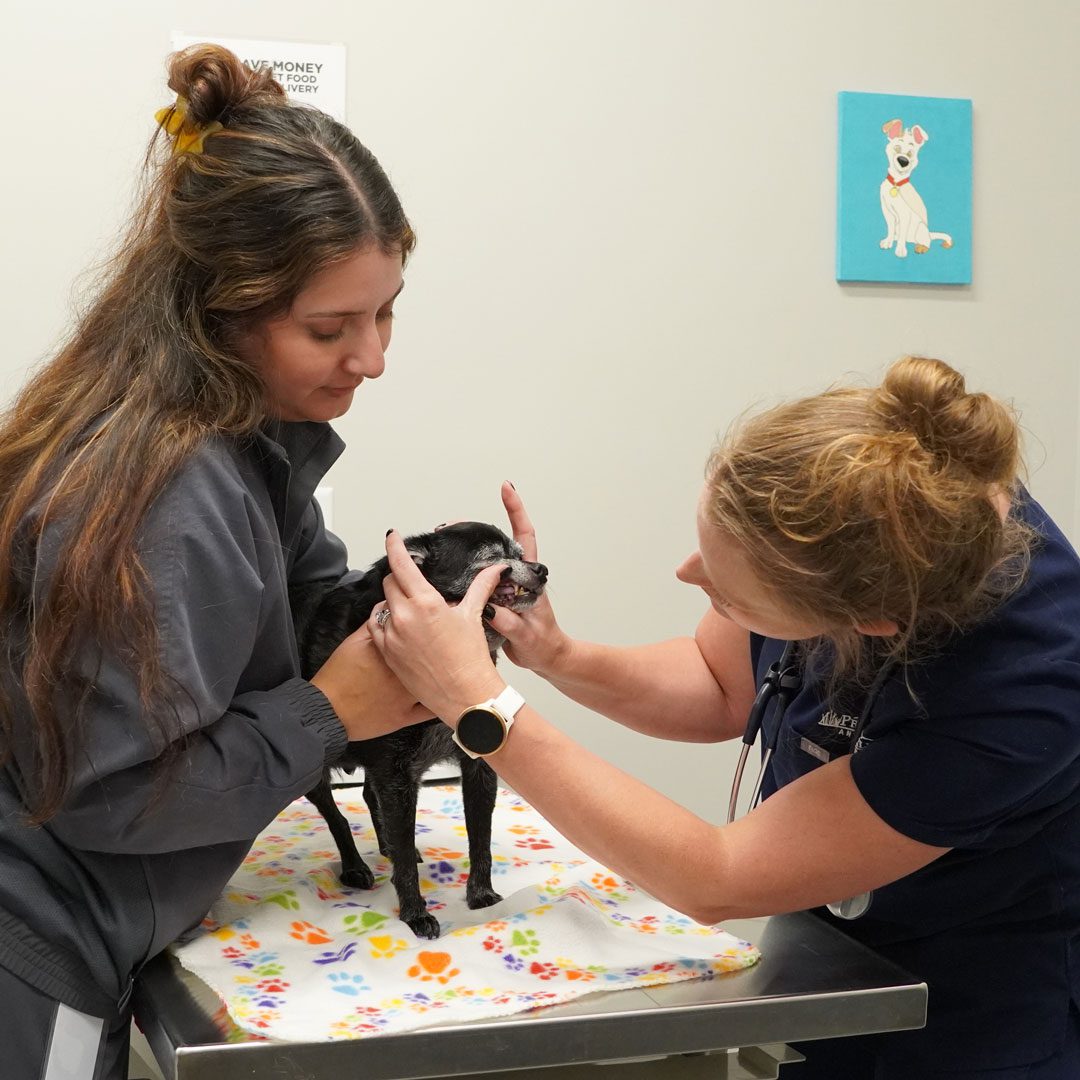

Dental care affects far more than your pet’s breath. It plays a role in comfort, appetite, and long-term health. We approach cat and dog teeth cleaning in Cheyenne, WY with tender care and clear communication, because dental disease often develops quietly and pets rarely show pain until it has progressed.
Our goal is to identify dental concerns early, explain what we’re seeing in a way that makes sense, and help you protect your pet from unnecessary discomfort.
If you’ve noticed bad breath, changes in eating, or it’s simply been a while since your pet’s teeth were evaluated, call or text us to schedule an oral health exam.
How Can You Tell if Your Pet Has Dental Disease?
Dental disease can develop quietly, especially below the gumline where you cannot see it at home. Some pets show obvious discomfort, while others continue eating and behaving normally despite significant oral disease.
Signs to watch for include:
Persistent bad breath
Yellow or brown tartar buildup
Red, swollen, or bleeding gums
Pain or difficulty eating, drinking, or chewing
Chewing primarily on one side of the mouth
Less interest in chew toys, tug games, or hard kibble
Dropping food while eating
Swelling along the face or jaw
Nasal discharge
Because pets may show few outward signs of dental pain, we evaluate the teeth and gums during every wellness visit. If you notice changes between routine visits, you can also schedule an oral health exam.
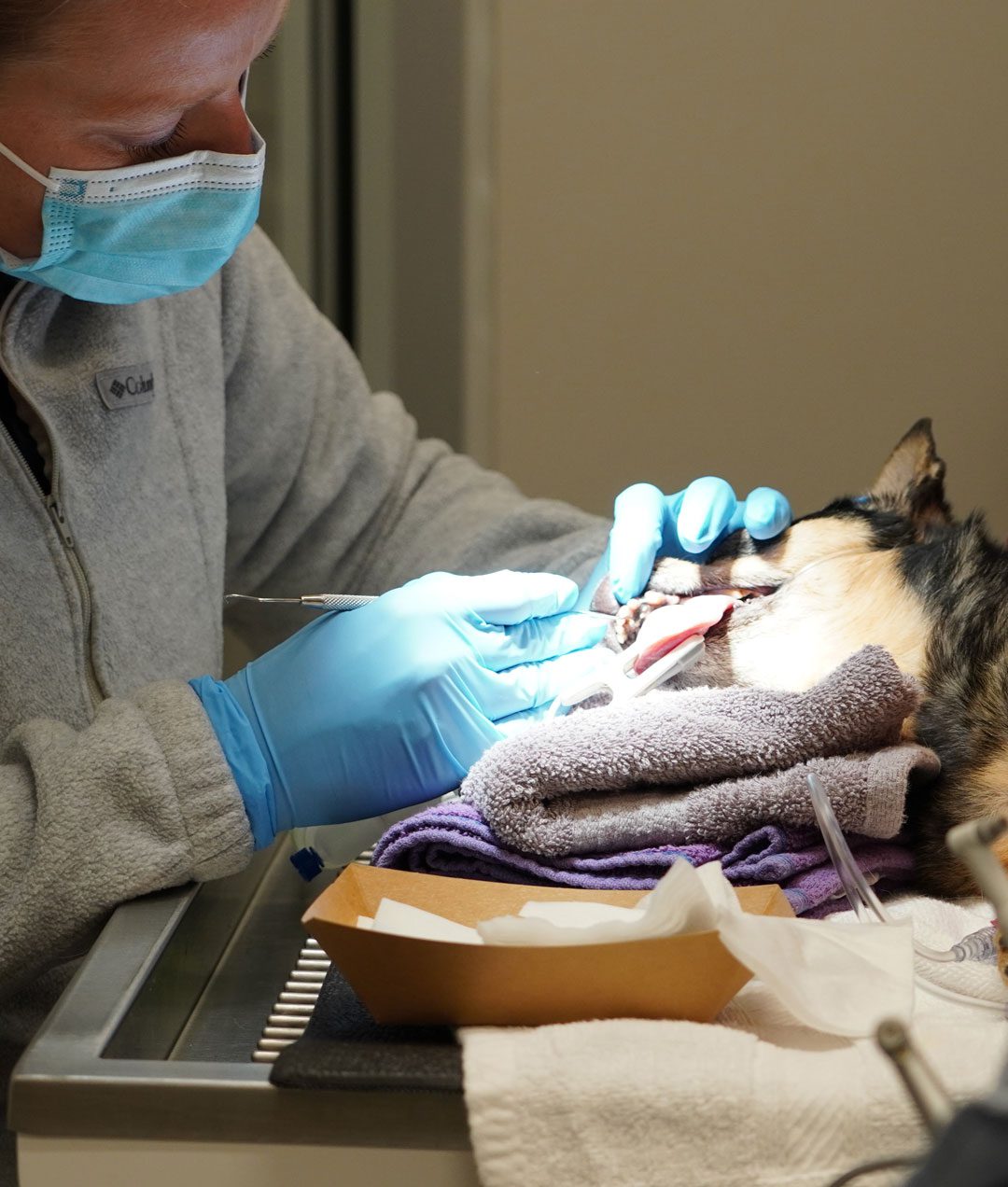
What Happens During a Professional Pet Dental Cleaning?
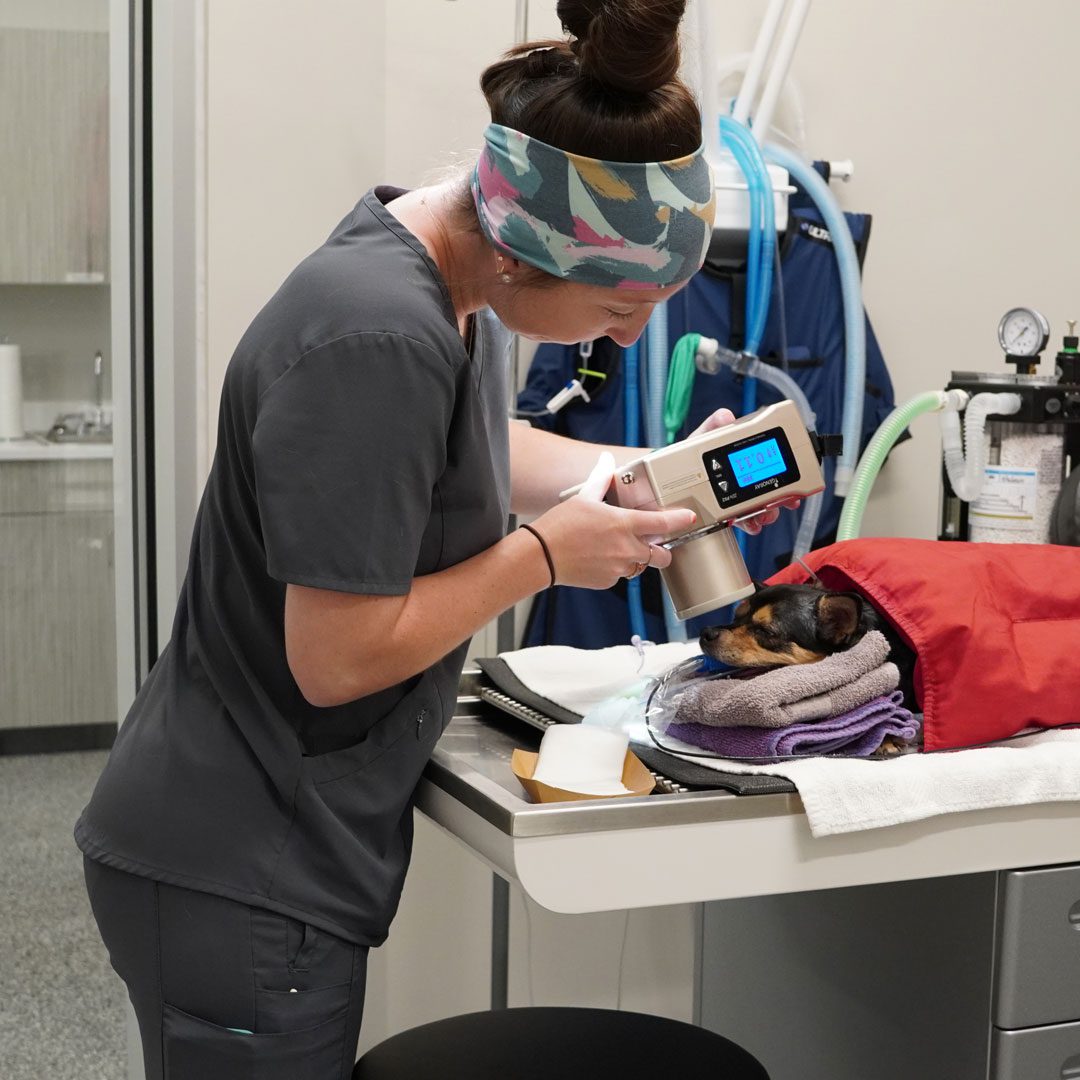
Dental procedures at our Cheyenne animal hospital take place in a dedicated dental suite equipped for professional cleaning and digital dental radiography. Each step gives us more information about your pet’s mouth while supporting their safety and comfort throughout the procedure.
How Can You Care for Your Pet’s Teeth at Home?
Professional dental care addresses disease and buildup that cannot be safely managed at home, while a consistent home routine can help slow new plaque and tartar accumulation between veterinary cleanings.
At-home dental care may include:
Tooth Brushing:
Use a pet-safe toothbrush or finger brush and toothpaste formulated specifically for animals. Starting gradually and creating a positive routine can make brushing easier for both of you.
Veterinary-Recommended Dental Chews:
These are designed to help mechanically reduce plaque and tartar as your pet chews.
Pet-Safe Water Additives:
Additives that can be added to drinking water to support oral hygiene.
Our team can help you choose options that make sense for your pet rather than sending you home with a routine neither of you will enjoy maintaining.
Dental disease is common, but it doesn’t have to become a source of chronic pain or infection. Reach out to book a dental evaluation for your pet.