

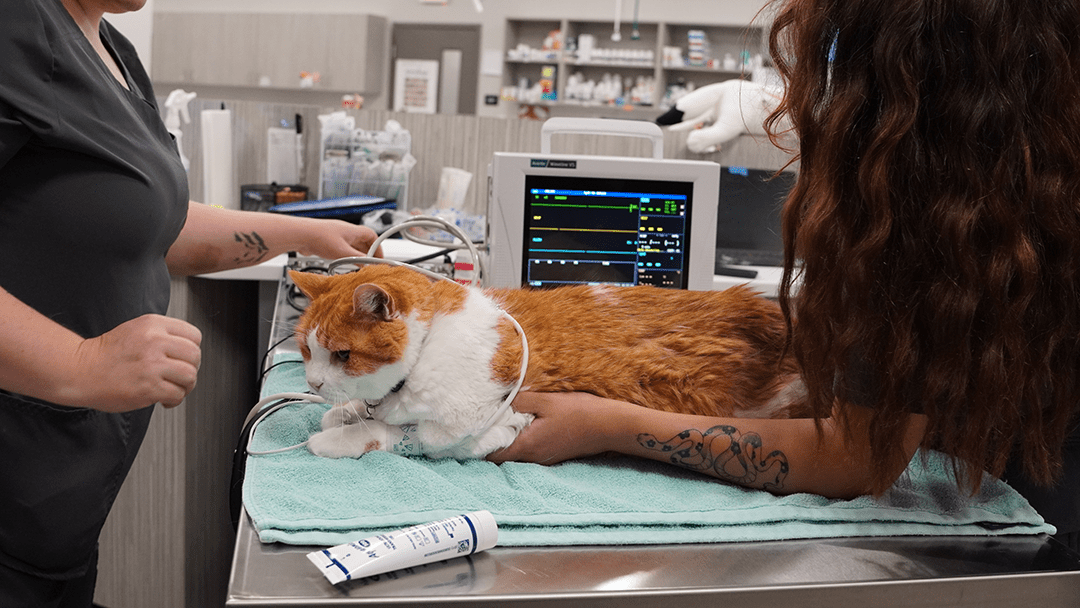
Some pet health concerns can’t wait for a routine appointment, but they may not require a full emergency hospital visit. When something changes quickly — sudden vomiting, limping, a torn nail, or unusual behavior — it’s reassuring to have a veterinary team in Cheyenne, WY ready to help.
At Prairie Hills Animal Hospital, our urgent veterinarian provides prompt care for pets experiencing non-life-threatening medical concerns. We take time to assess your pet’s symptoms, determine the underlying cause, and guide the next steps in their care with clarity and compassion.
If something has suddenly changed with your pet, call or text us as soon as possible. We’ll ask about their symptoms and help determine the appropriate next step.
What Pet Health Problems Need Urgent Veterinary Care?
Urgent veterinary care is appropriate for illnesses, injuries, and changes in health that should be evaluated promptly but do not appear immediately life-threatening. Getting these concerns checked sooner can help relieve discomfort, identify the cause, and prevent some conditions from becoming more serious.
Common reasons to seek urgent veterinary care include:
Vomiting or diarrhea that does not improve
Sudden limping or difficulty walking
Minor wounds or injuries
Torn or injured nails
Ear infections, head shaking, or painful ears
Eye redness, irritation, squinting, or discharge
Sudden lethargy or unusual behavior
Mild allergic reactions, including swelling or itching
Persistent coughing or sneezing
Changes in urination or bowel movements
Loss of appetite
Excessive thirst
Skin infections, rashes, or hot spots
Not every symptom fits neatly into an “urgent” or “emergency” category. If you aren’t sure how quickly your pet needs care, call and tell us what you’re seeing.
What Happens During an Urgent Care Visit?
When your pet is sick or hurting, getting answers matters. We start by learning what changed, when the symptoms began, and anything else you’ve noticed at home. Your veterinarian will then examine your pet and discuss what may be causing the problem.
Depending on your pet’s condition, we may recommend diagnostic testing such as bloodwork, urinalysis, fecal testing, digital X-rays, or ultrasound. Prairie Hills Animal Hospital has an in-house laboratory and advanced diagnostic equipment that allow us to investigate many health concerns without sending you elsewhere.
Once we have a clearer picture, we’ll explain our findings, treatment recommendations, and what you should watch for at home. If your pet needs a level of emergency or specialty care beyond what we can provide, we’ll help direct you to an appropriate facility.
Urgent Care vs. Emergency Care: Where Should You Take Your Pet?
The biggest difference between urgent and emergency veterinary care is the immediate risk to your pet’s life or health. Urgent conditions need timely attention, while emergencies may require immediate stabilization, intensive monitoring, hospitalization, or other advanced critical care.
Seek emergency veterinary care immediately if your pet is experiencing:
Difficulty breathing or severe respiratory distress
Collapse or inability to stand
Severe trauma or uncontrolled bleeding
Suspected poisoning or toxin ingestion
Seizures, especially prolonged or repeated seizures
Severe abdominal pain or a swollen, distended abdomen
Repeated vomiting or diarrhea accompanied by significant weakness
Sudden paralysis or inability to use one or more limbs
If your pet needs urgent care, contact us. We’ll listen to what’s happening, help determine how quickly your pet needs care, and guide you toward the appropriate next step.
If your pet is experiencing a life-threatening emergency, we recommend contacting one of the following emergency veterinary hospitals immediately.
Four Seasons Veterinary Specialists
(970) 800-1106
4120 Clydesdale Pkwy, Loveland, CO 80538
Fort Collins Veterinary Emergency Hospital
(970) 847-2226
816 S Lemay Ave, Fort Collins, Colorado 80524
Royal Vista Veterinary Specialists
(970) 825-5975
4630 Royal Vista Cir Ste 11, Windsor, Colorado 80528
Colorado State University Veterinary Teaching Hospital
(970) 297-5000
300 W Drake Rd, Fort Collins, CO 80523